
Loading...
Serving Petaluma, CA and surrounding areas. (707) 750-8396
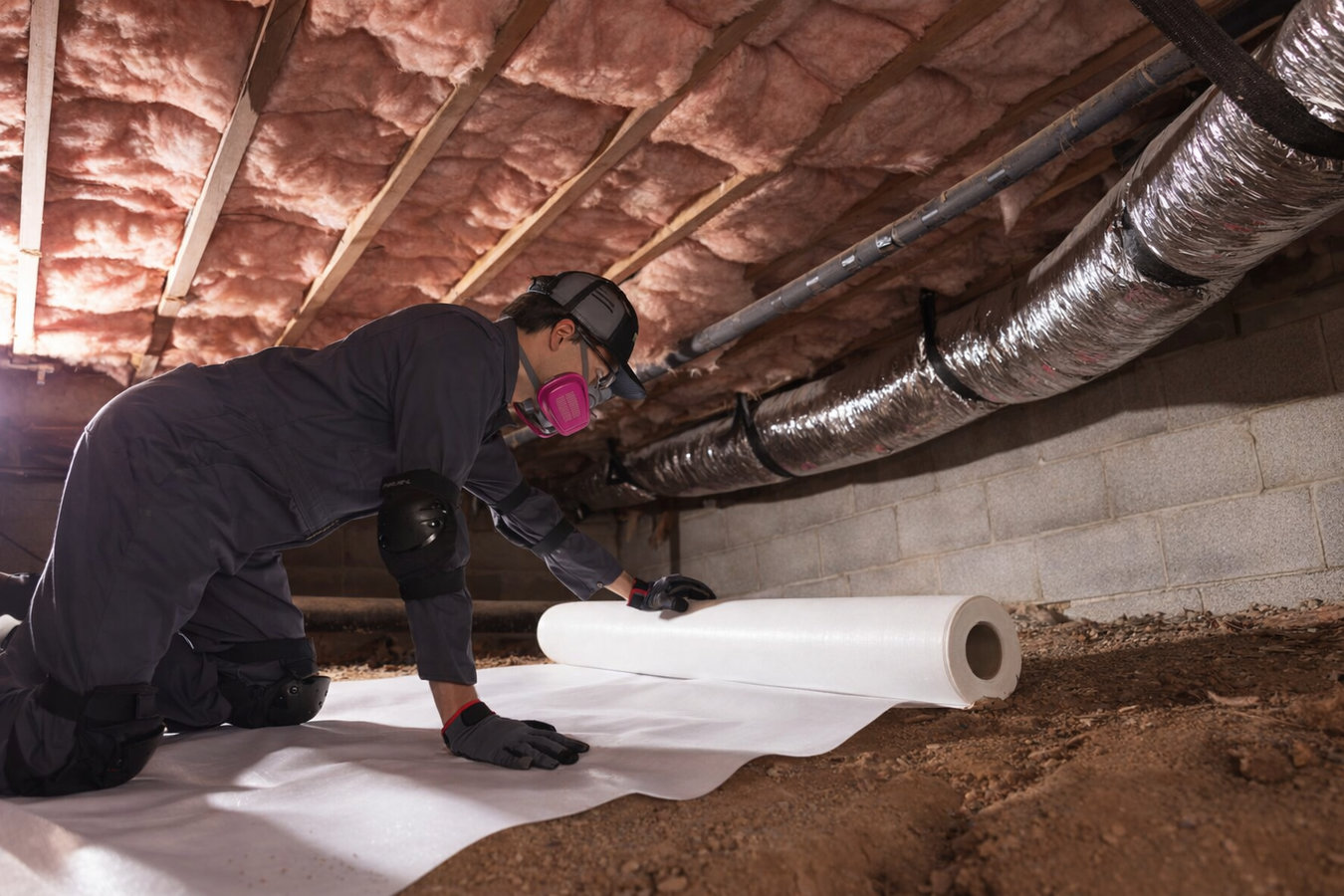
Petaluma winters push ground moisture into unprotected crawl spaces every year. A properly installed vapor barrier stops that at the source and protects your home's structure for decades.
Vapor barrier installation in Petaluma places a sealed layer of heavy-duty polyethylene sheeting across your crawl space or basement floor, blocking ground moisture from rising into your home's framing and insulation. For most single-family homes, the installation is completed in one day without any disruption to your routine inside the house.
Think of a vapor barrier as a raincoat for the underside of your house. Without it, the saturated clay soils that are common throughout Petaluma and Sonoma County push moisture vapor upward into your crawl space every November through April - right into the wood that supports your floors. That moisture softens joists, feeds mold, and makes your home harder and more expensive to heat. Vapor barrier installation is one of the most direct solutions for this problem. If you are also dealing with a musty smell or cold floors, our crawl space vapor barrier service covers the full crawl space floor-and-wall approach in detail.
A significant share of Petaluma homes built in the 1940s through 1970s were never fitted with a vapor barrier at all. If your home is more than 40 years old and has no record of crawl space work, there is a good chance the soil under your house is completely unprotected.
If your hardwood or laminate floors feel noticeably cold underfoot during Petaluma's rainy season - even with the heat on - moisture rising from the crawl space may be the cause. In some cases, you might notice the floor feeling slightly soft or springy in spots, which can mean the subfloor is absorbing moisture over time. This is one of the most common early signs that the crawl space below is not properly protected.
Petaluma's wet winters mean crawl spaces can stay damp for months at a stretch. If you notice a musty or earthy smell in your home that intensifies after a rainstorm or during the wet season, that odor is often coming from below - from mold or mildew growing in a damp, unprotected crawl space. The smell tends to be strongest near floor vents, in hallways, or in rooms closest to the ground.
If you or a contractor has looked into your crawl space and noticed water droplets on the pipes, metal straps, or wooden beams, that is a direct sign of excess moisture in the space. Condensation on structural wood is particularly worth taking seriously - over time, it can lead to wood rot and attract wood-destroying insects. This is not a cosmetic issue; it is a structural one that gets more expensive to fix the longer it is ignored.
If you own a home built before the 1980s in Petaluma - particularly in older neighborhoods near downtown or the west side - there is a real chance no vapor barrier was ever installed, or whatever was there originally has deteriorated. A quick look under the access panel with a flashlight is often enough to confirm: bare dirt with no plastic sheeting means the crawl space is unprotected and the problem is ongoing every rainy season.
Every vapor barrier installation starts with an on-site assessment - not a phone quote. A technician accesses your crawl space, checks the size and layout, looks for standing water or drainage issues, and assesses the condition of any existing material. That information shapes the scope and price, which you receive in a written estimate before any commitment. We use 10 to 20 mil polyethylene sheeting, with seams overlapped by at least a foot and sealed with tape, and the barrier running up the foundation walls rather than just lying flat on the ground. Those details are what separate a quality installation from one that fails within a few years. For projects that include both the floor and foundation wall coverage as part of a full crawl space encapsulation, retrofit insulation is often combined with vapor barrier work to address moisture and thermal performance in one visit.
California's building standards require contractors to be familiar with crawl space moisture management requirements, particularly when work is part of a permitted renovation. The U.S. Department of Energy moisture control guidance notes that sealing and conditioning a crawl space is one of the more cost-effective home improvements available. Homeowners in Petaluma who want to verify California-specific permit requirements before work begins can contact the City of Petaluma Building Division directly - a reputable contractor will also know what applies to your project scope.
For raised-foundation homes with a dirt crawl space floor - the most common configuration in Petaluma's older neighborhoods.
For homes with a basement or partial basement where moisture migrates through the concrete slab or bare dirt floor.
For homes with severe moisture conditions - a sealed system covering floor and all foundation walls, often combined with ventilation changes.
For homes where a previous barrier has torn, shifted, or degraded over time and no longer provides meaningful moisture protection.
Petaluma receives most of its 25 to 30 inches of annual rainfall between November and April, and the clay-heavy soils throughout Sonoma County hold that water close to the surface long after the rains stop. That means the soil under a Petaluma crawl space can stay saturated well into spring - pushing moisture vapor upward for months at a time. Homes with no barrier, or with old plastic sheeting that has torn and shifted over the decades, are absorbing that moisture into their wood structure every single wet season. Older neighborhoods across the west side and the historic downtown area have a particularly high concentration of pre-1970s construction where this protection was simply never part of the original build. Homeowners in Rohnert Park and Santa Rosa face the same climate and soil conditions, and we see the same patterns of unprotected crawl spaces in those communities as well.
Petaluma's mild winters mean installation can happen at almost any time of year - the ground rarely freezes, which makes crawl space work practical throughout the year. That said, the smartest window is late summer through early fall, before the rains arrive and while the soil is at its driest. Many homeowners discover the problem mid-winter when they notice the smell or feel the cold floors, and scheduling as soon as possible after that is still worthwhile. The damage accumulates slowly, but it does accumulate - and every rainy season without protection adds to the total.
When you reach out, we ask a few basic questions about your home - age, any moisture or smell issues you have noticed, and whether you know if a barrier is already in place. We then schedule an in-person visit. We do not quote prices over the phone without seeing your crawl space first. Be cautious of any contractor who does.
A technician accesses your crawl space and checks the layout, condition, existing material, and any drainage or standing water issues. The visit typically takes 30 to 60 minutes. You receive a written estimate that breaks down the scope and cost - not a verbal ballpark. If multiple contractors are quoting the same project, make sure each covers the same scope so you are comparing apples to apples.
The crew clears any debris, lays the barrier material across the ground, overlaps and tapes the seams, and secures the edges to the foundation walls. For an average Petaluma single-family home, this takes one full day. You stay in your home throughout - you will hear some movement from below, but nothing disruptive to your routine.
Before the crew leaves, they confirm the space is clean, the barrier is fully secured, and there are no drainage issues that need separate attention. Ask them to show you photos of the finished installation - a confident contractor will provide them without hesitation. Most homeowners notice the musty smell fading within a few weeks of the first dry stretch of weather.
We reply within one business day. No obligation - just a clear look at your crawl space and a written estimate you can use to compare.
(707) 750-8396Every job starts with an in-person assessment and ends with a written estimate that spells out the scope, material, and total cost. That documentation protects you when comparing contractors and gives you a clear record if you ever sell the home or need warranty work. We do not quote without seeing your crawl space first.
From Victorian-era homes on the west side to postwar ranches in the central neighborhoods and newer east side subdivisions, we have worked in Petaluma crawl spaces of every age and configuration. Pre-1970s homes with low clearance, irregular layouts from decades of additions, and clay-heavy soil drainage issues are all familiar to our crew - not surprises.
We serve all 12 communities in our service network, from Petaluma to Rohnert Park, Novato, Napa, and beyond. That regional footprint means consistent pricing and no travel premiums for properties outside Petaluma proper. If you are managing a rental or second property in a nearby city, we handle those jobs on the same terms.
Because vapor barrier work happens somewhere most homeowners never see, we photograph the crawl space before we start and after we finish. Those photos go to you - they confirm the installation was done correctly, show you exactly how seams and wall coverage were handled, and serve as a record for future inspections, permit applications, or home sales.
We combine local Sonoma County housing knowledge with California code requirements and the kind of documentation that gives homeowners real confidence in what was done under their house. That combination is what makes the difference between a job that holds up for decades and one that fails quietly.
Insulation upgrades for existing Petaluma homes without full renovation - often combined with vapor barrier installation to address both moisture and thermal performance in one project.
Learn moreFocused crawl space floor and wall coverage for homes where ground moisture is the primary concern - including full encapsulation for severe moisture conditions.
Learn moreFall installation slots fill quickly as homeowners prepare for wet weather - call now or submit your estimate request to get on the schedule before November arrives.