
Loading...
Serving Petaluma, CA and surrounding areas. (707) 750-8396
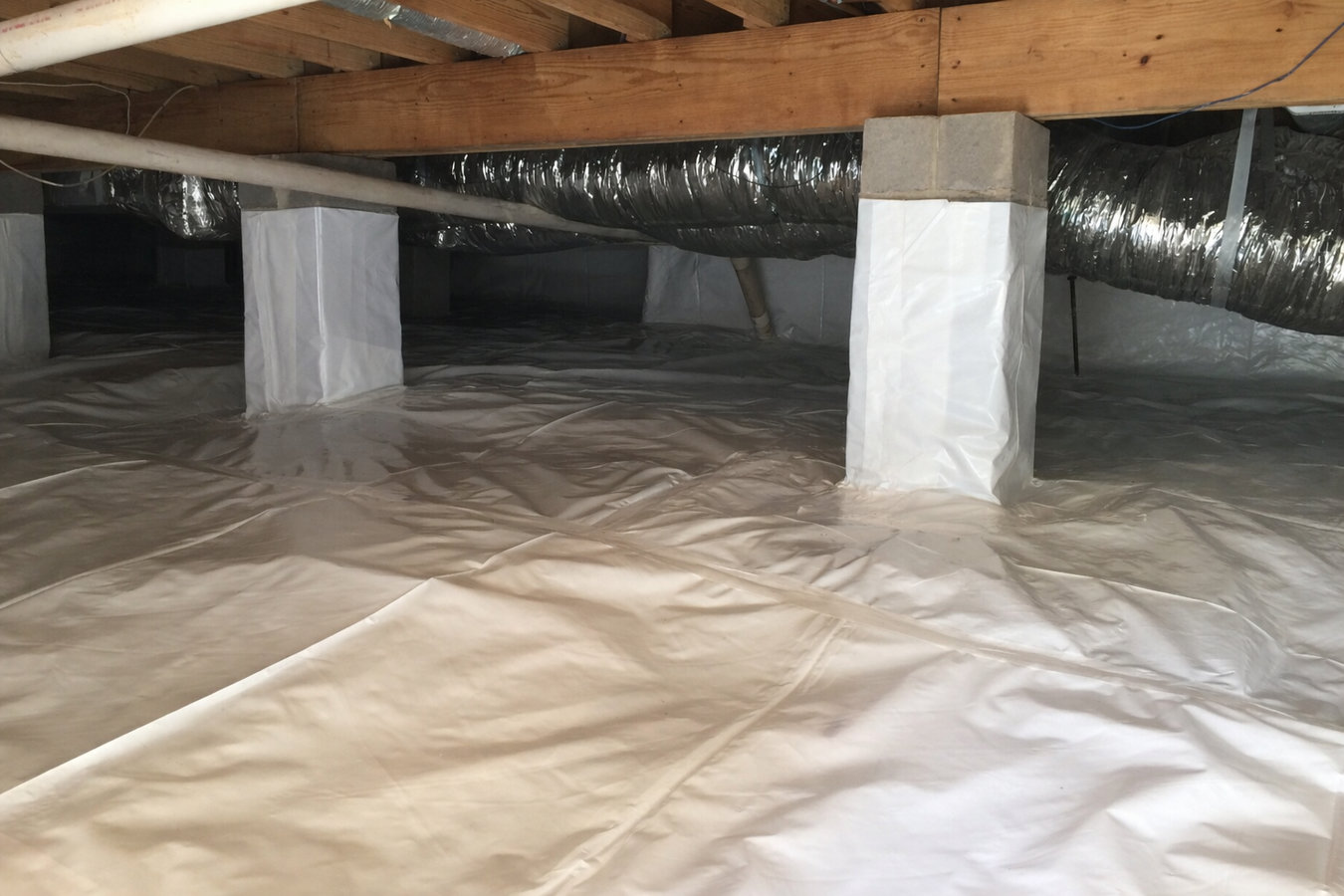
Ground moisture rising into your Petaluma crawl space is quietly damaging your floors and framing every wet winter. We install a sealed vapor barrier so it stops for good.
Crawl space vapor barrier installation in Petaluma blocks ground moisture from rising into your home by laying sealed heavy-duty plastic sheeting across the entire crawl space floor and up the foundation walls. Most jobs are completed in one full day without any disruption to your daily routine inside the house.
Petaluma gets most of its rain between November and March, and during those months the soil under older homes stays saturated for weeks at a time. That moisture moves upward into your crawl space, where it softens wood framing, feeds mold, and creates the damp, earthy smell that gets stronger every time it rains. A vapor barrier cuts that process off at the source. If you are dealing with dampness above the crawl space as well, our crawl space insulation service addresses the thermal side of the problem alongside moisture control.
Many Petaluma homes built before the 1970s were constructed without any vapor barrier at all. If your home is more than 40 years old and you have no record of crawl space work, there is a good chance the space has bare dirt or a deteriorated barrier that is no longer doing its job.
If your hardwood or subfloor feels slightly bouncy or has started to dip in spots, that is often a sign that the wood underneath has been absorbing moisture for a long time. In Petaluma's older homes, where floor joists may already be aging, prolonged crawl space moisture can cause wood to soften before you ever see visible damage from above. Catching it early saves a much larger repair bill later.
A damp, earthy smell that gets stronger after Petaluma's winter rains is one of the clearest signs that moisture is moving up from your crawl space into your living areas. Mold and mildew produce that smell, and they grow in exactly the conditions a bare or damaged crawl space creates. If the odor comes and goes with the weather, the crawl space is almost certainly the source.
If anyone has looked into your crawl space and seen water droplets on pipes, metal straps, or wood beams, that is moisture from the ground doing exactly what it does without a barrier in place. Wet surfaces underground are not normal and are a direct sign that protection is needed. Condensation on structural wood is worth taking seriously - it leads to rot and attracts wood-destroying insects over time.
Many Petaluma homes built before the late 1970s simply did not include vapor barriers as a standard feature. If you bought an older home and have no record of crawl space work, there is a reasonable chance the space has bare dirt or deteriorated plastic that is no longer functional. This is worth checking before a wet winter makes the problem worse - often a quick look with a flashlight tells you what you need to know.
Every crawl space vapor barrier job starts with an inspection - we access the space through the hatch or foundation door and assess the current condition, the size and layout of the space, and whether there are any drainage issues, mold, or damaged material that need to be addressed before the barrier goes in. We use heavy-duty polyethylene sheeting rated at 10 to 20 mils thick, which holds up to foot traffic and lasts decades without tearing. Seams are overlapped by at least a foot and sealed with tape, and the sheeting runs up the foundation walls and is fastened in place so moisture cannot sneak in around the edges. The goal is complete coverage - no bare dirt anywhere. If you want to address both moisture and cold floors at the same time, vapor barrier installation covers the full scope of barrier options across all crawl space and basement configurations.
Permits for crawl space work in Petaluma go through the City of Petaluma Building Division. For a standalone vapor barrier installation, a permit is often not required - but if the project is part of a larger scope that includes insulation or ventilation changes, we handle the permit process for you. The U.S. EPA Mold and Moisture resources explain why blocking ground moisture at the source is the most effective way to prevent crawl space mold long-term. California homeowners may also benefit from the Department of Energy moisture control guidance when evaluating crawl space improvements alongside energy upgrades.
Best for homes with a dirt crawl space floor that has no existing barrier or has old, degraded plastic that needs to be replaced.
For crawl spaces with accumulated debris, old insulation fall-down, or material that needs to come out before the new barrier can go in.
For homes where moisture is severe - covering the floor and all foundation walls with sealed sheeting and addressing ventilation to create a fully conditioned crawl space.
When a crawl space inspection reveals active mold or mildew, we treat the affected areas first and then install the barrier after the space has been properly cleaned.
Petaluma sits in a North Bay valley and receives most of its 25 to 28 inches of annual rainfall between November and March. The soils throughout much of Sonoma County are clay-heavy, which means they drain slowly - the ground under a Petaluma crawl space can stay saturated well into spring, pushing moisture vapor upward into the structure for months at a stretch. Homes with no vapor barrier or an old, degraded one are taking in that moisture every wet season, year after year. The damage accumulates quietly in floor joists, subfloor panels, and insulation long before it shows up in any way you would notice from inside the house. Homeowners in Novato and San Rafael face similar moisture conditions across their older housing stock, and we see the same patterns of unprotected crawl spaces in those areas as well.
A significant share of Petaluma's residential neighborhoods - particularly in the historic downtown area, along the west side streets, and in the older postwar tracts - feature homes built in the 1940s through the 1970s. Many were constructed without vapor barriers as a standard feature, and some have bare dirt crawl spaces that have never been addressed in 50 or 60 years of ownership. California's building energy standards have since raised the bar for how crawl spaces must be managed in permitted work, but that only helps homes that have gone through a recent renovation. For the majority of older Petaluma homes, the only path to proper moisture protection is a proactive installation.
We reply within one business day to every inquiry. On your first call we ask a few basic questions - the age of your home, whether you have noticed any moisture or smell, and whether anyone has been in the crawl space recently. Then we schedule an in-person visit. No prices over the phone without seeing the space.
A technician accesses your crawl space through the hatch or foundation door and assesses the size, condition, and any drainage or mold issues. You get a clear explanation of what was found and a written estimate before any commitment. If a permit is required, we handle the Petaluma Building Division process and include it in the timeline.
The crew enters the crawl space, removes any debris or old damaged material, and lays the new barrier across the entire floor. Seams are overlapped and taped, and the sheeting runs up the foundation walls. Most Petaluma homes are done in one full day. You stay in your home throughout - you will hear some movement from below, but your routine is not disrupted.
Before the crew leaves, they walk you through what was done - including photos from inside the crawl space so you can see the finished installation without climbing in yourself. They explain what to look for going forward and whether any follow-up is recommended. Most homeowners notice the musty smell fading within a few weeks of the first dry stretch.
We reply within one business day. No obligation, no pressure - just a clear look at what your crawl space needs.
(707) 750-8396Petaluma's clay-heavy soils hold water close to the surface well into spring - we scope every job knowing that, not assuming a one-size-fits-all approach applies. That familiarity shapes how we select barrier thickness and how we handle seams near foundation walls where hydrostatic pressure is highest.
Crawl space work happens somewhere most homeowners never see. We document the job with photos before we start and after we finish, so you can verify the installation was done correctly without having to climb in yourself. That documentation also protects you if you ever sell the home and a buyer asks about crawl space condition.
We serve all 12 areas in our service network - from Petaluma and Rohnert Park to Novato, San Rafael, and beyond. That regional footprint means we are never working in an unfamiliar climate zone or housing type. We know what a 1950s Petaluma bungalow crawl space looks like versus a newer East Side home, and we price accordingly.
All work is performed by experienced crews who know what Petaluma's Building Division expects when permits are required. We coordinate the permit application on jobs that need it and document the completed work, so your home has a clear record when you sell.
We have worked on crawl spaces across Sonoma County's full range of housing types - Victorian-era homes on Petaluma's west side, postwar ranches throughout the central neighborhoods, and newer subdivisions on the east side. That range means we show up knowing what to expect and how to handle it.
Full vapor barrier options for crawl spaces and basements, including material selection guidance for Petaluma's high-moisture clay soil conditions.
Learn moreInsulation for the floor joists and walls of your crawl space, paired with moisture control to address both cold floors and ground dampness together.
Learn morePetaluma's rainy season starts in November - getting a barrier in place before the ground saturates is the most effective timing. Call now or request a free estimate.